Dork
Dork is a Zork-like text adventure my team and I built in Python. It is a game of mystery and intrigue, but mostly memes.
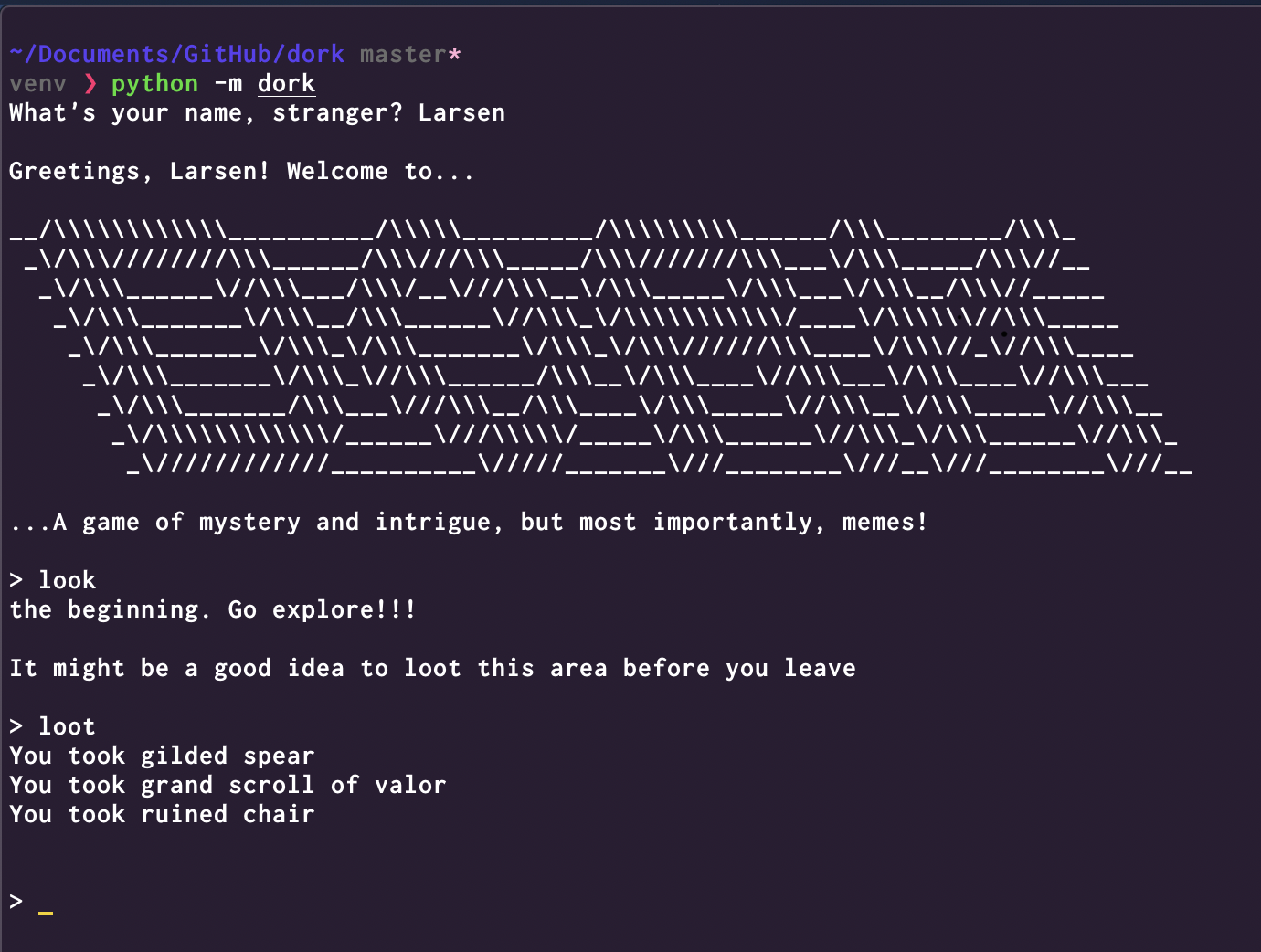
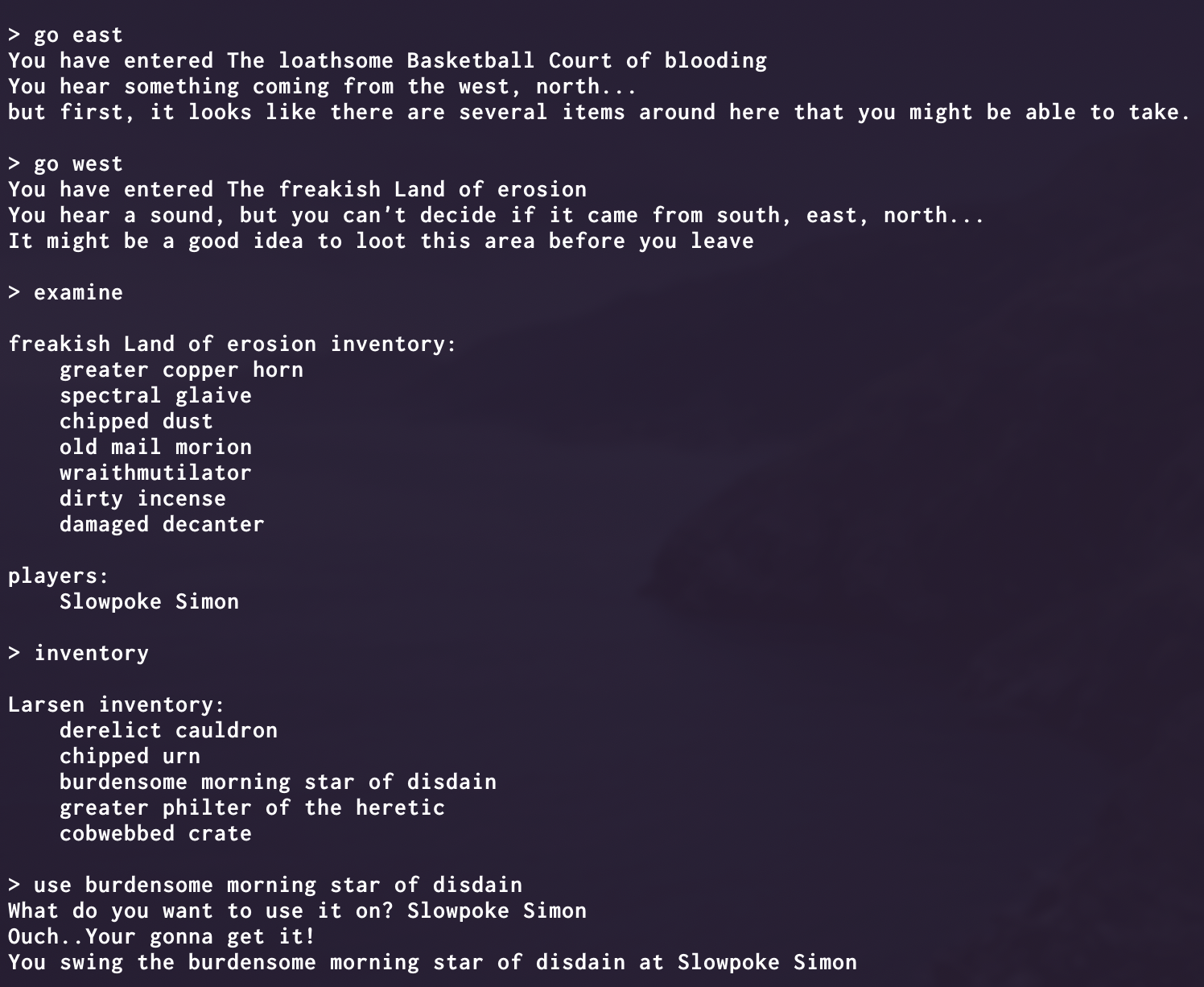
Each new game generates a maze, then fills its rooms with descriptions, items, and ridiculous non-player characters. You move with cardinal directions and simple commands such as look, examine, loot, and use. The item generator is responsible for things like a “burdensome morning star of disdain,” which is still a better weapon name than I would have written by hand.
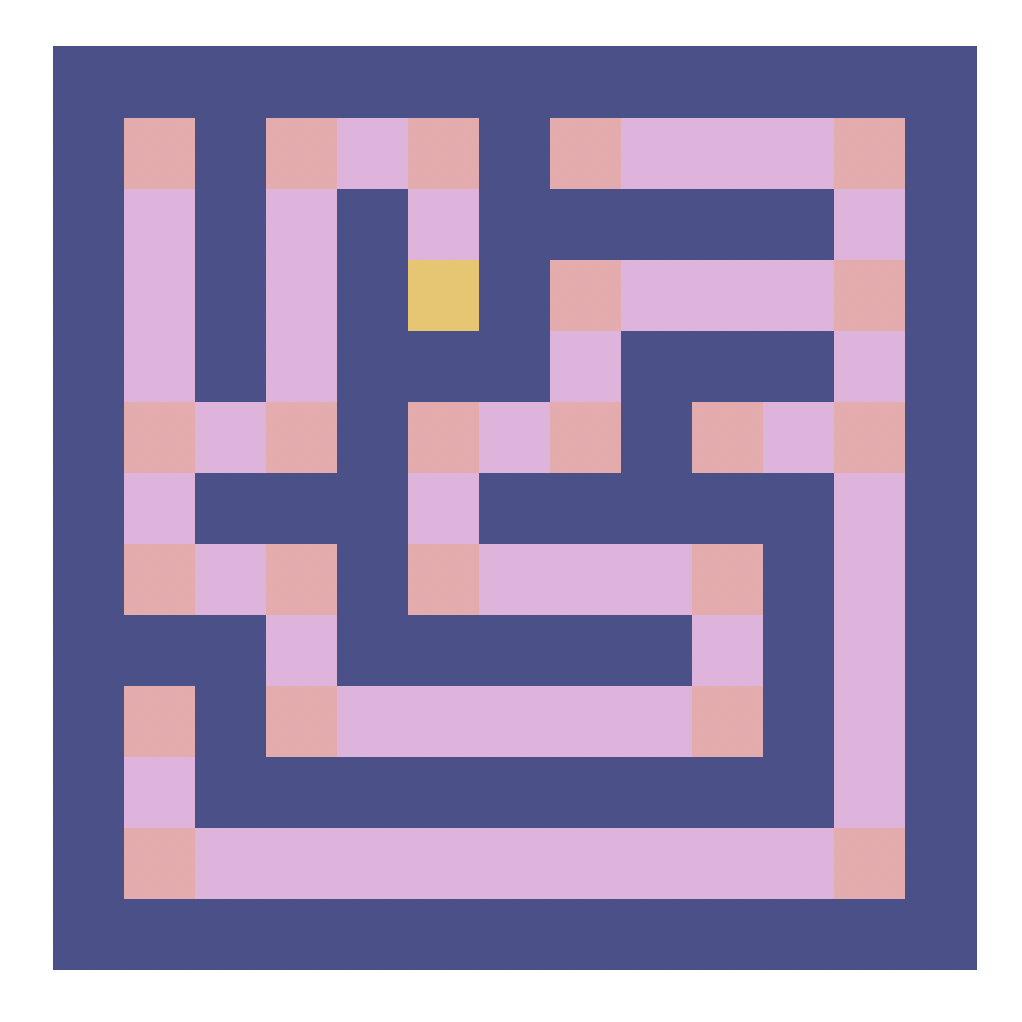
The game keeps track of the player, map, inventory, NPCs, and points. Games can be saved and loaded without throwing that state away.
Building it as a team
We built Dork in two-week Scrum sprints. Work came from a product-owner backlog based on customer requests, and each sprint ended with another working and tested version of the game. That process mattered because several people were changing the same world generator, command system, data files, and tests at once.
We used GitHub for version control. Travis ran Pylint, Flake8, the pytest suite, branch coverage, Codecov, and SonarCloud on the shared repository. Sphinx built the documentation, which is still available on Read the Docs.
The full Python source is public on GitHub. The original team finished the project in 2019 and no longer maintains it, so the repository is a record rather than an actively supported game.
The browser version
There is now a browser-playable version of Dork on this site. It is a later implementation written in Rust and compiled to WebAssembly, not the original Python team project.
Dork turned out well and was a pleasure to work on. Working with a team created coordination problems none of us would have had alone. It also let us build something much larger and stranger than any one of us could have finished in the same time.